01What Computer Programming 12 covers
The BC curriculum for Computer Programming 12 covers the design cycle; advanced programming structures; standardized source code documentation; collaboration tools and pair programming; user interface design; error handling and debugging tools; managing complexity; uses of pre-built data structures; and responding to bug reports and feature requests.
02How Computer Programming 12 is assessed
Your school sets the projects, tests and final assessments; there is no provincial exam for this course. Most of the mark usually comes from programming projects.
03Your course, clearly identified
Computer Programming 12 is listed in British Columbia’s course catalogue at Grade 12. Literal official ADST title, Information and Communications Technology stream of ADST 12.
04Computer Programming 12: topics to discuss
Program design, modularity, data structures, algorithm analysis and software-development practice. Compare candidate algorithms and justify test coverage. Make the student’s design decisions visible through pseudocode, meaningful variable names and explanations of expected behaviour. Confirm the current topic sequence and full coverage using your school’s outline and the official source below.
05Building confidence in computer science
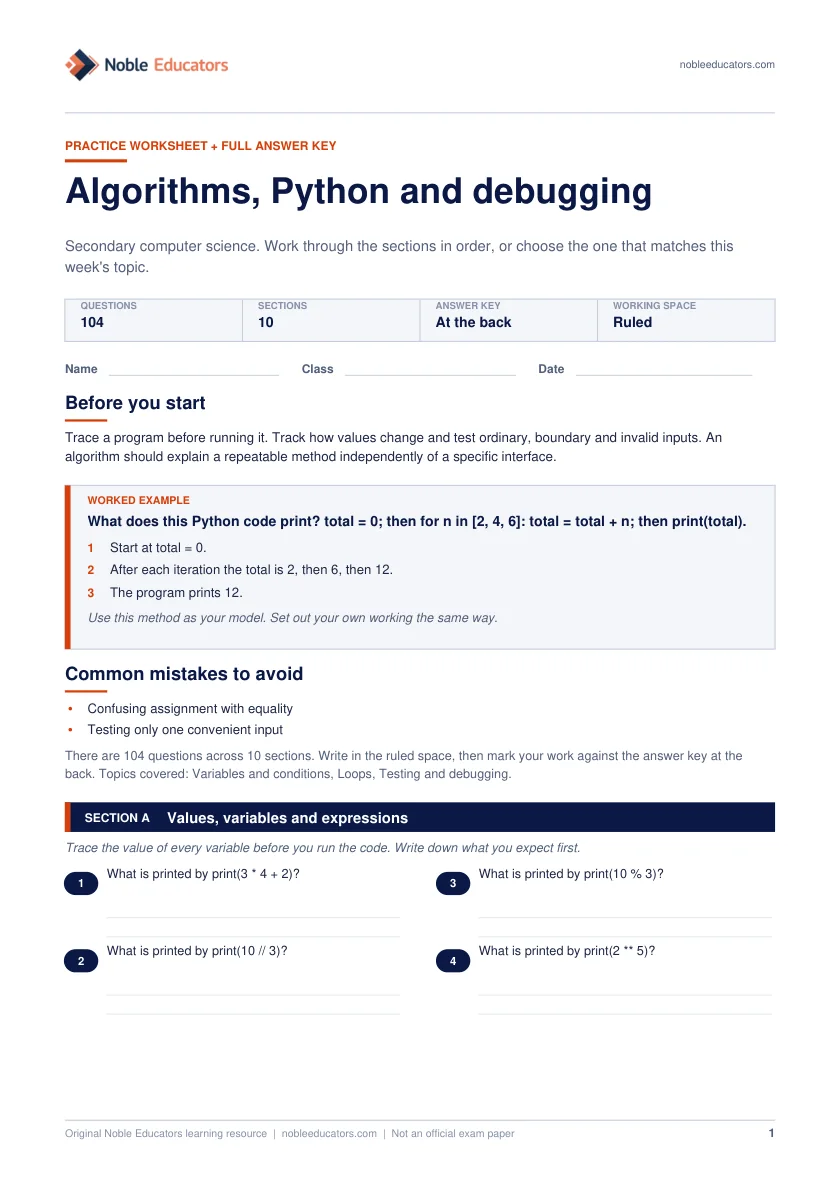
Trace a program before running it. Track how values change and test ordinary, boundary and invalid inputs. An algorithm should explain a repeatable method independently of a specific interface. Lessons can alternate a modelled example, a question attempted together and an independent attempt so the tutor can see where understanding changes.
06Use school feedback to guide revision
Bring a recent coding task, trace table or test case. Explain where you got stuck. The next practice task should check that particular skill before introducing more complexity. Tutoring supports learning; assessed submissions remain the student’s own work.