01What SNC2D covers
The Ontario Grade 10 academic science course covers biology (tissues, organs and systems of living things), chemistry (chemical reactions), earth and space science (climate change) and physics (light and geometric optics), together with scientific investigation skills.
02How SNC2D is assessed
As in every Ontario course, 70% of the mark comes from work during the course and 30% from final evaluations, usually a final exam. SNC2D is the prerequisite for the Grade 11 university-preparation sciences: SBI3U, SCH3U and SPH3U.
03Your course, clearly identified
Science, Academic (SNC2D) is listed in Ontario’s course catalogue at Grade 10. Ask your school for the current course outline and assessment expectations, then share them with your tutor.
04SNC2D: topics to discuss
Biological systems, chemical reactions, climate-related evidence, light and optics. Connect a scientific diagram to an explanation, balance a reaction without changing chemical formulas and use evidence to support a claim. Topic selection follows the school’s current unit. Confirm the current topic sequence and full coverage using your school’s outline and the official source below.
05Building confidence in science
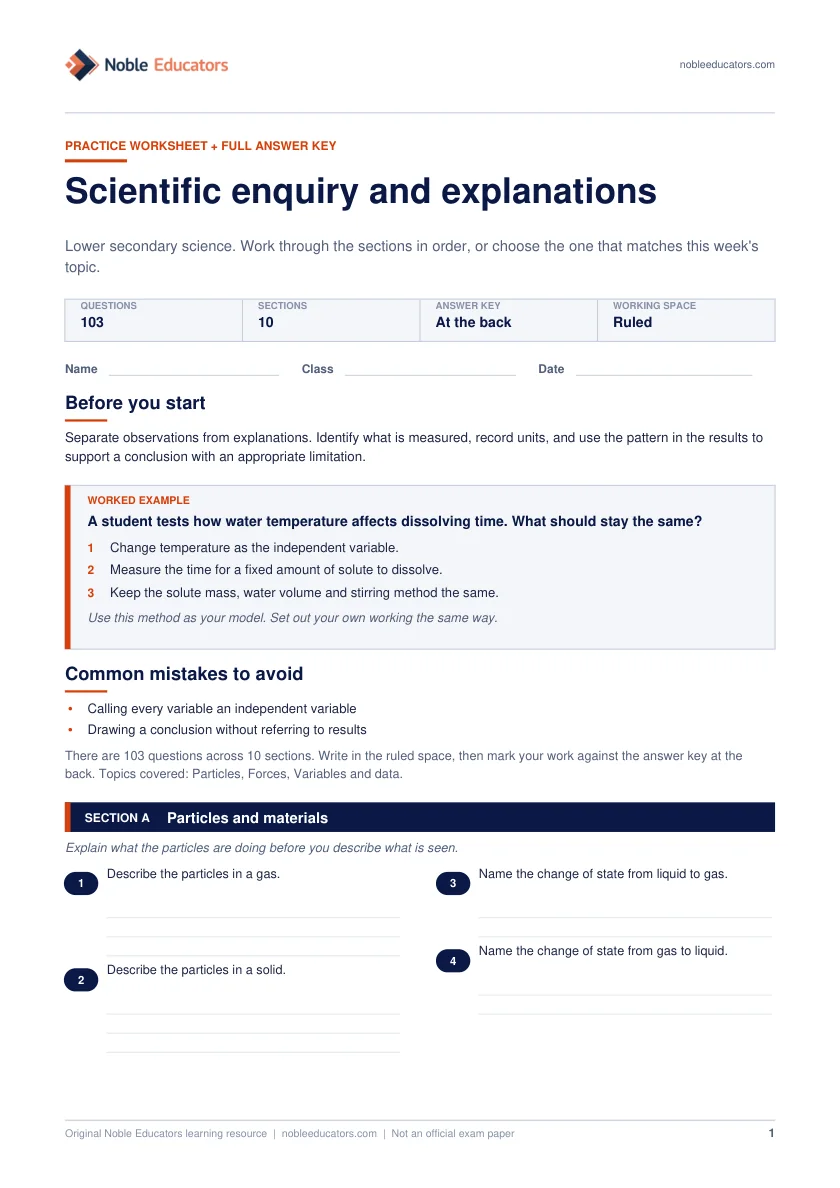
Separate observations from explanations. Identify what is measured, record units, and use the pattern in the results to support a conclusion with an appropriate limitation. Lessons can alternate a modelled example, a question attempted together and an independent attempt so the tutor can see where understanding changes.
06Use school feedback to guide revision
Bring a recent question, marked solution or topic checklist. Explain where you got stuck. The next practice task should check that particular skill before introducing more complexity. Tutoring supports learning; assessed submissions remain the student’s own work.