01The SBI3U strands
The Ontario Grades 11 and 12 science curriculum organises SBI3U into six strands: A. Scientific Investigation Skills and Career Exploration; B. Diversity of Living Things; C. Evolution; D. Genetic Processes; E. Animals: Structure and Function; and F. Plants: Anatomy, Growth, and Function.
02How SBI3U is assessed
As in every Ontario course, 70% of the mark comes from work during the course and 30% from final evaluations, usually a final exam. Labs and lab reports are part of the term mark. The prerequisite is SNC2D, and SBI3U leads to SBI4U.
03Your course, clearly identified
Biology, University Preparation (SBI3U) is listed in Ontario’s course catalogue at Grade 11. Ask your school for the current course outline and assessment expectations, then share them with your tutor.
04SBI3U: topics to discuss
Diversity of living things, evolution, genetics, animal systems and plant structure or function. Link a structure to a function and use evidence when explaining an evolutionary or biological pattern. Inheritance questions begin with clearly defined alleles and parent genotypes. Confirm the current topic sequence and full coverage using your school’s outline and the official source below.
05Building confidence in science
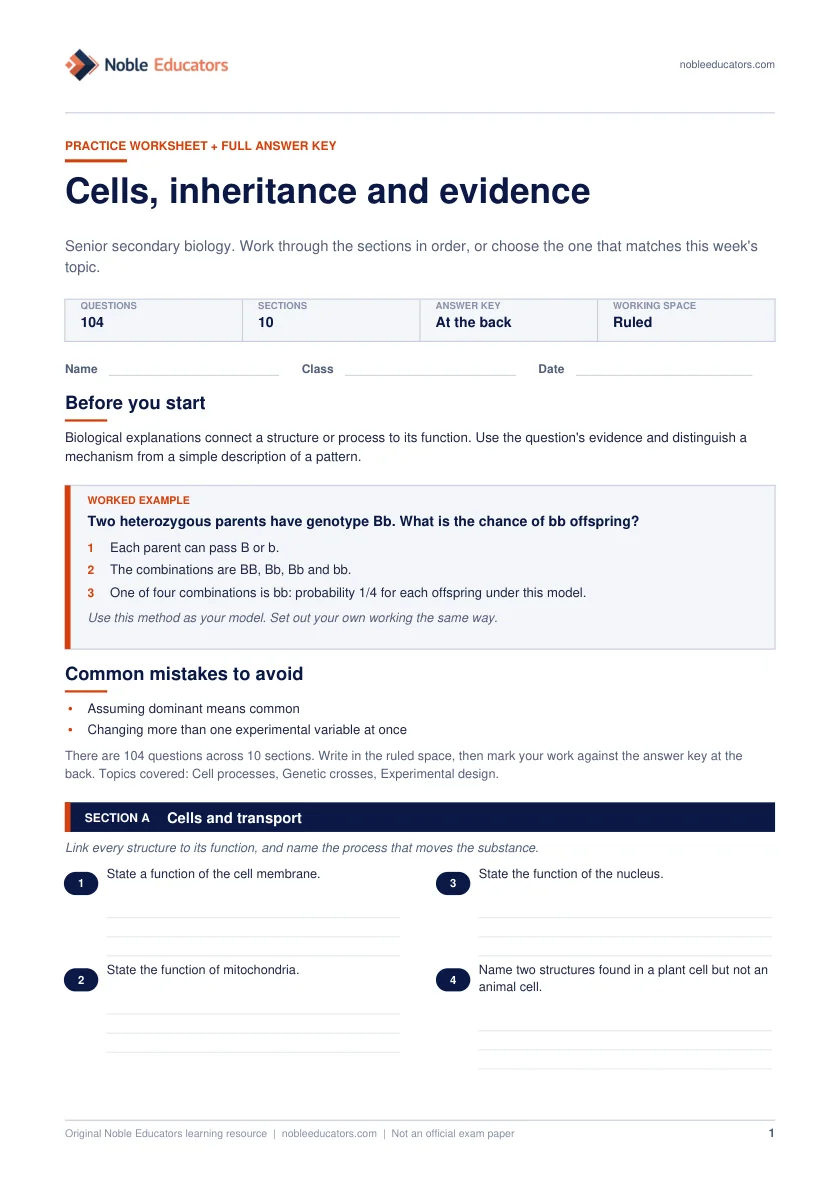
Biological explanations connect a structure or process to its function. Use the question's evidence and distinguish a mechanism from a simple description of a pattern. Lessons can alternate a modelled example, a question attempted together and an independent attempt so the tutor can see where understanding changes.
06Use school feedback to guide revision
Bring a recent question, marked solution or topic checklist. Explain where you got stuck. The next practice task should check that particular skill before introducing more complexity. Tutoring supports learning; assessed submissions remain the student’s own work.