
Prompt reading and planning
- breaking down assignment prompts
- choosing a purpose and audience
- building outlines before drafting
- planning time for revision
Help your child move from a blank page to a clear thesis, organized outline, stronger evidence, smoother paragraphs, and a final draft they can explain with confidence.

Essay Writing Tutoring
Thesis, outline, evidence, revision, and grammar
Essay Writing topics
Tutoring follows the student's assignment while keeping the big writing habits visible: answer the prompt, make a claim, organize the evidence, explain the reasoning, and revise with purpose.
How tutoring works
Essay Writing improves when students can see the plan before they draft. The tutoring process makes the thesis, outline, evidence, analysis, revision target, and final checklist explicit.
Identify the task word, text or source requirement, essay type, rubric, length, and due date so the writing has a clear target.
Turn the student's first idea into a specific claim, then map topic sentences, evidence, and paragraph order before writing.
Use quotes, examples, or facts carefully, then explain why each piece of evidence supports the paragraph's main point.
Check structure first, evidence second, clarity third, and grammar last so feedback improves the actual essay rather than just polishing sentences.
Goal
Revise thesis + add analysis
Make the claim specific, choose evidence, and explain why the evidence proves the point.
Claim
clear thesis
Evidence
specific quote
Explain
why it matters
Step 1
Read the prompt
Step 2
Plan the paragraph
Step 3
Revise with comments
Tutor prompt
Explain the revision
"Which sentence proves your thesis, and where do you explain it?"
Response checklist
Essay Writing Tutoring
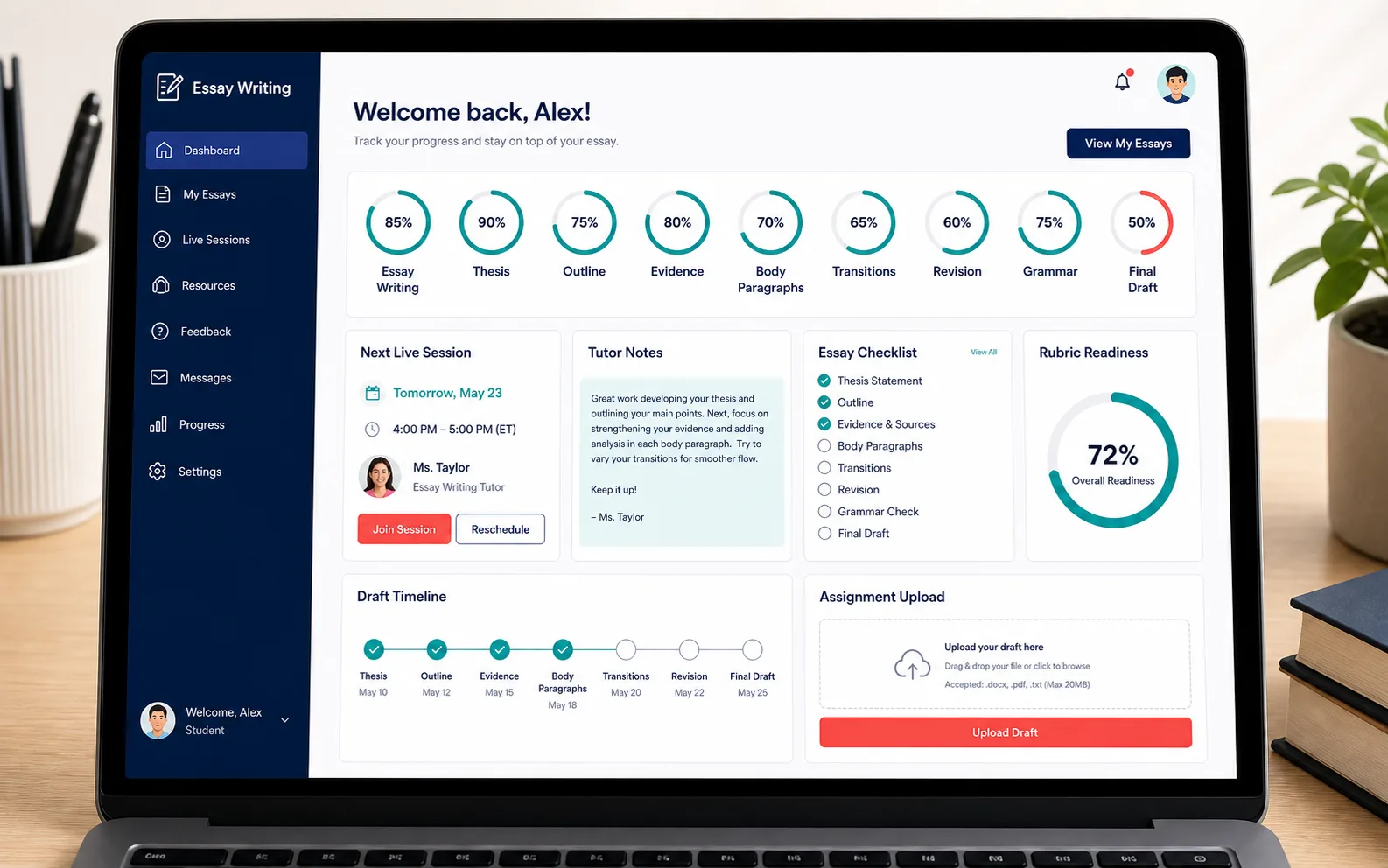
Personal learning hub
Student learning hub
A useful Essay Writing workspace makes the next revision target clear. Students can keep tutoring sessions, margin comments, rubric notes, revised paragraphs, and upcoming deadlines connected to the same writing plan.
Keep the join link, current unit, and upcoming Essay Writing session details ready before tutoring starts.
Track thesis, outline, evidence, body paragraphs, revision, grammar check, and final draft milestones in order.
Save margin comments, revised paragraphs, rubric notes, and next-step feedback in one learning workspace.
See which skills are improving across assignments: structure, evidence, clarity, grammar, and confidence.
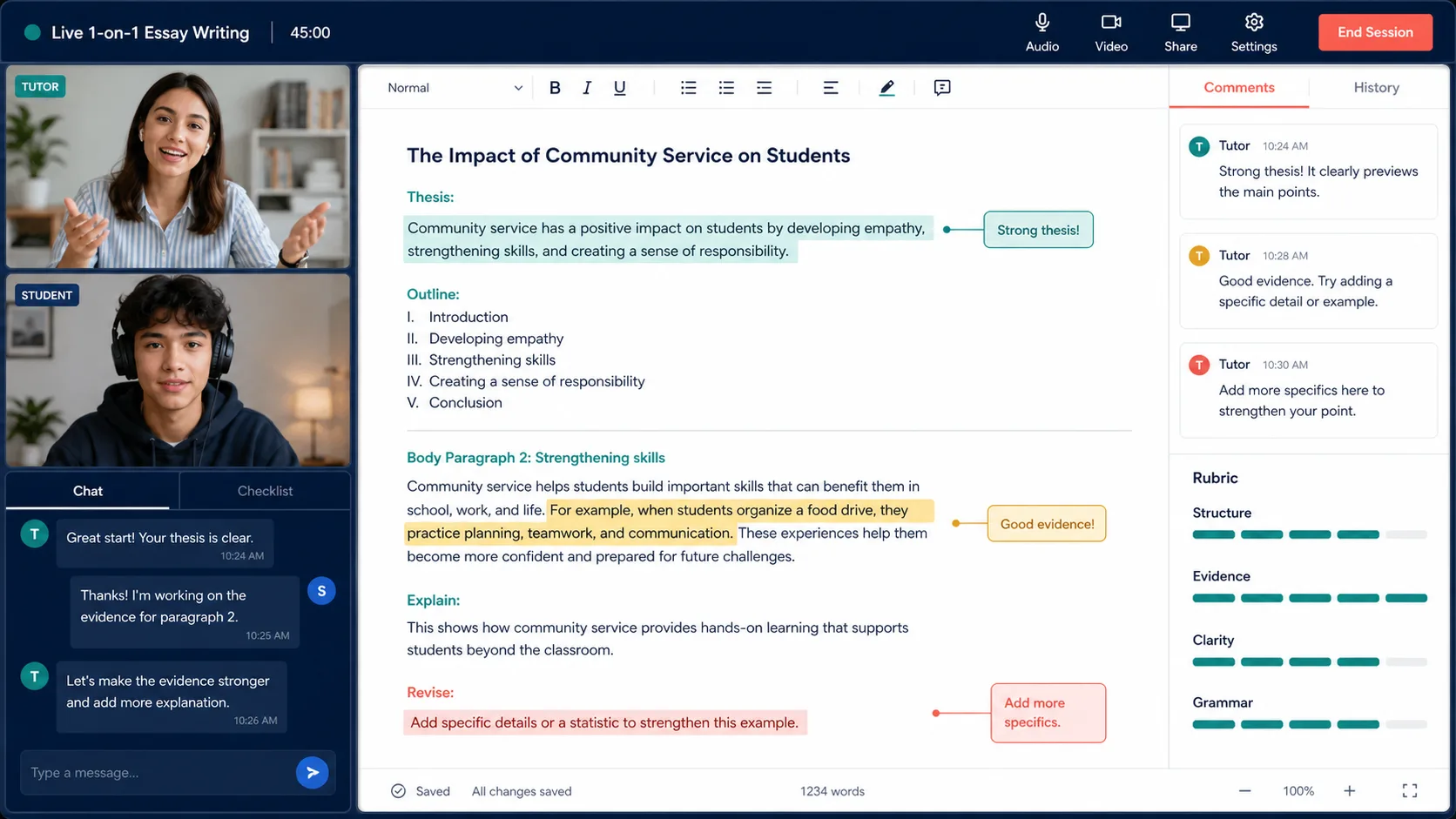
1-on-1 class interface
The shared class space makes writing visible: a tutor can mark a thesis, highlight evidence, add revision comments, review the rubric, and help the student explain each change.
A shared writing document keeps the prompt, thesis, outline, body paragraph, evidence, comments, and rubric visible together.
The tutor can ask why a sentence supports the claim before helping the student revise it for clarity and evidence.
Each session ends with the next writing target, so students know whether to revise structure, add evidence, strengthen analysis, or proofread.
Essay Writing readiness planning
Essay Writing is easier when students know what kind of feedback the draft needs. Tutoring builds the assignment around four practical habits: read the prompt, plan the claim, prove each paragraph, and revise in layers.
Common first-session materials
A prompt, rubric, teacher comment, source packet, outline, rough draft, or final-draft checklist helps the tutor decide whether to start with thesis, structure, evidence, analysis, clarity, or grammar.
Students learn to identify the task, essay type, required sources, rubric language, and final product before they begin drafting.
Tutoring strengthens thesis statements, topic sentences, paragraph focus, quote integration, and analysis so drafts become easier to revise.
Students practice revising in layers: organization, evidence, clarity, transitions, sentence style, grammar, and final formatting.
Students can bring essay prompts, teacher comments, rubrics, source packets, outlines, rough drafts, or final revisions so tutoring stays tied to the real assignment.
Essay Writing resources
These branded resources keep essay planning, thesis writing, paragraph structure, evidence, analysis, transitions, revision, grammar, and final-draft checks together. They are designed to support a tutoring session, independent review, or a parent conversation about the next writing target.
Task words, audience, purpose, rubric review, assignment constraints, and prewriting decisions.
Specific claims, clear scope, claim-plus-reasons structure, and revising vague thesis drafts.
Topic sentences, evidence placement, analysis, paragraph unity, and concluding links.
Quoting, paraphrasing, context, citation expectations, and relevance to the claim.
Structure pass, evidence pass, clarity pass, transition review, and final proofreading.
Argument, literary analysis, expository, compare-contrast, narrative, and school writing assignments.
Five print-friendly pages covering prompt planning, thesis statements, body paragraphs, evidence, source use, revision, clarity, grammar checks, and common essay types.
Open Review Guide PDFSeven printable pages with 50 Essay Writing practice items across thesis writing, paragraph structure, evidence, analysis, transitions, revision, grammar, and final-draft checks, with a full answer key.
Open Practice Worksheet PDFPricing comparison
Provider pricing and packages change, so families should confirm current terms directly. This comparison shows how the Noble Educators session model differs from other familiar online learning options.
| Provider | Pricing model shown | Format | Best fit |
|---|---|---|---|
Noble EducatorsNoble rate | $15 / session | 1-on-1 online Essay Writing tutoring | Families who want school-aligned writing support, draft feedback, rubric review, and a clear per-session rate. |
Wyzant | Tutor-set rates | Tutor marketplace | Families who prefer browsing individual tutor profiles and rates. |
Varsity Tutors | Plan-based pricing | Live tutoring and memberships | Families considering a larger tutoring package or membership model. |
Tutor.com | Subscription plans | On-demand tutoring | Students who need quick homework help across several subjects. |
Outschool | Class-specific pricing | Live and self-paced classes | Families looking for group classes as well as private learning options. |
Khan Academy | Free self-guided practice | Videos and practice activities | Independent review, rather than recurring live 1-on-1 tutoring. |
Common challenges
Essay Writing asks students to combine ideas, organization, source evidence, sentence clarity, and revision judgment. Focused tutoring makes that thinking visible.
Tutors help students turn broad opinions into specific claims that preview the essay's direction.
Students practice adding context before evidence and explanation after evidence so paragraphs prove the point.
Lessons separate structure, evidence, clarity, and grammar so students know what kind of revision the draft actually needs.
Some students need help starting a draft. Others need literary analysis, argumentative structure, quote integration, grammar repair, or final-draft revision. Noble Educators can match the inquiry to a tutor who fits the student's grade, assignment, and goal.
Meet our teachersParents can share a current unit, worksheet photo, quiz correction, placement packet, or teacher note before tutoring begins. That gives the tutor a practical starting point and helps each session focus on the Essay Writing skill that matters next.
See how it worksQuestions parents ask
Related tutoring
Compare related English support, tutor options, pricing, and the next steps behind a focused writing plan.
Share the student's grade, assignment type, current Essay Writing focus, and what feels difficult. Noble Educators will help you choose the most useful next step.