Reading comprehension and annotation
- main idea and supporting details
- inferences backed by text clues
- active annotation while reading
- point of view, tone, and theme
1-on-1 Middle School ELA tutoring for grades 6-8 reading comprehension, vocabulary, grammar, writing, text evidence, short responses, and school assignments. Book a free demo.
Reading and evidence
Grammar and writing
School assignment help
What students practice
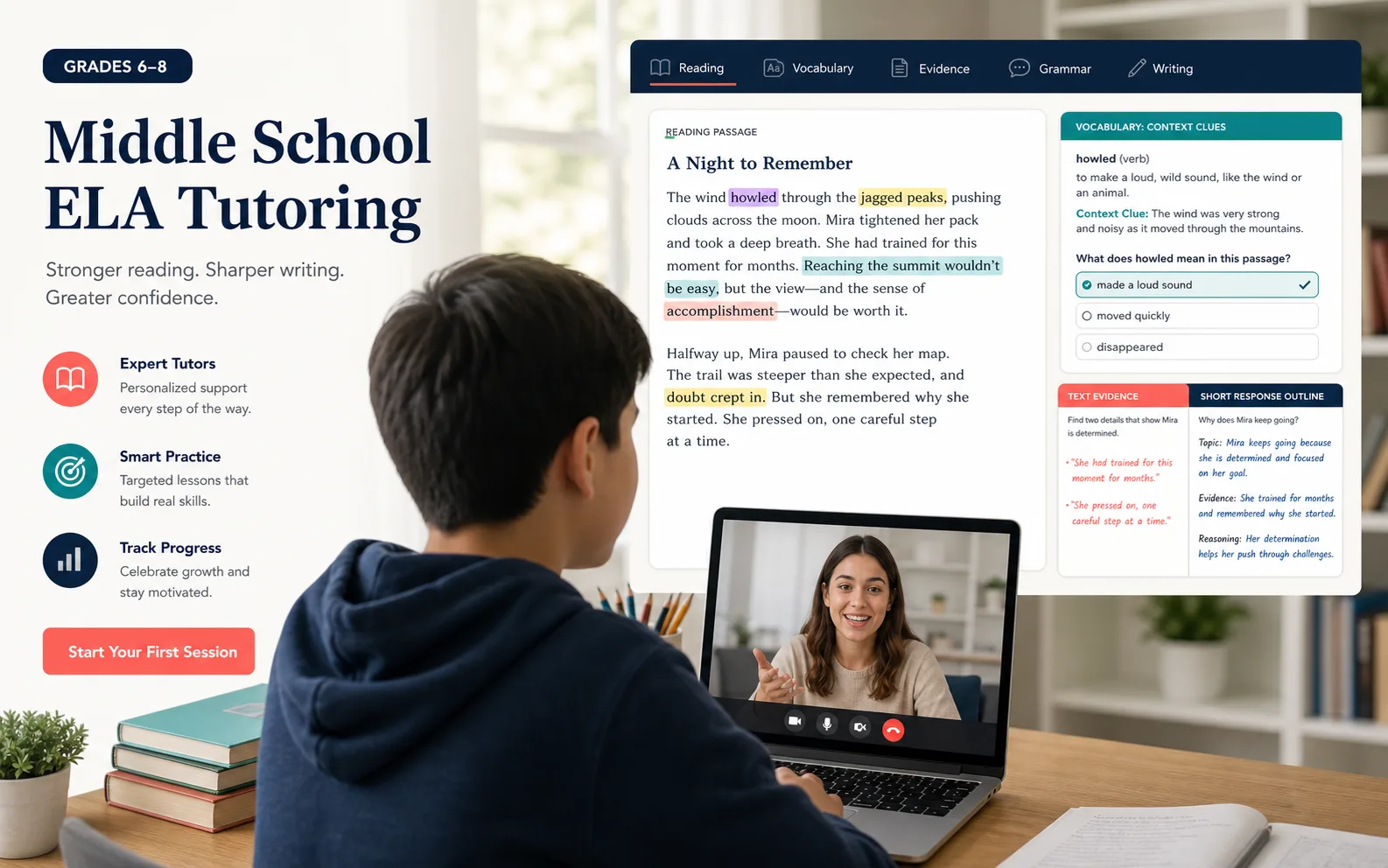
Grades 6-8 ELA improves when students can name the reading move, choose useful evidence, write the answer, and revise it. Tutoring makes those habits visible.
How tutoring works
Middle School ELA tutoring starts with the student's real classwork, then teaches a repeatable process for reading, evidence, writing, and revision.
The tutor reviews the passage, novel, worksheet, rubric, quiz correction, or teacher comment before choosing the session target.
Students mark the text, name the question type, choose evidence, and explain why a detail supports the answer.
Short responses and paragraphs use clear claim, evidence, reasoning, revision, and grammar checks so schoolwork becomes less random.
Each session ends with a concrete next step: reread a passage, revise a paragraph, practice grammar, or prepare for a class discussion.
Goal
Claim + evidence + explanation
Choose the line that proves the answer, then explain how the detail supports the claim.
Read
mark key clue
Cite
choose evidence
Explain
connect to claim
Step 1
Annotate the passage
Step 2
Answer the prompt
Step 3
Revise the sentence
Tutor prompt
Use the text
"Which sentence proves your inference, and how do you know?"
Response checklist
Middle School ELA Tutoring
Personal learning hub
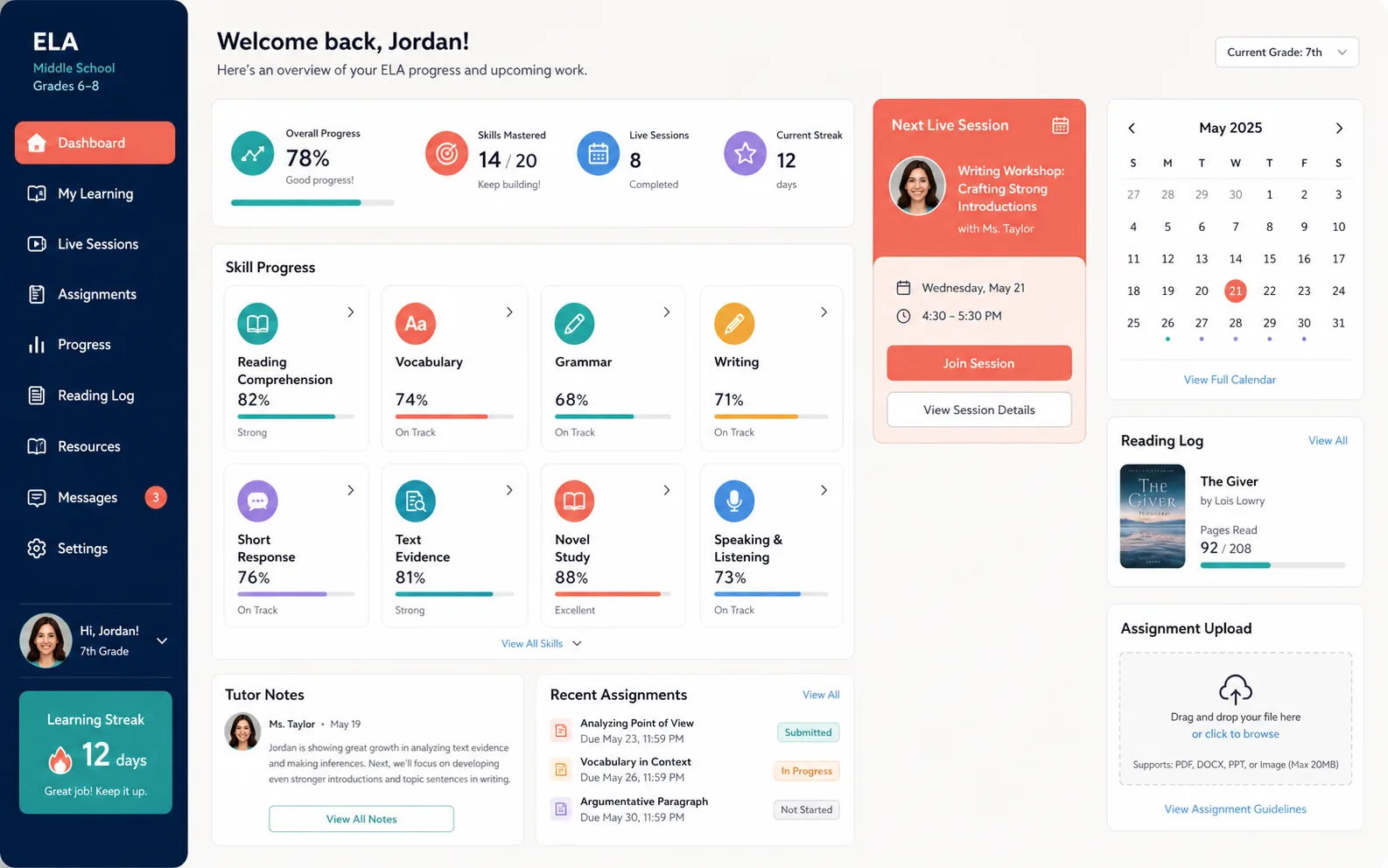
Student learning hub
A useful ELA workspace connects passages, novel notes, vocabulary lists, paragraph drafts, tutor feedback, and upcoming assignment dates to the same learning plan.
Keep the join link, current ELA unit, passage, assignment, and next grades 6-8 tutoring session ready.
Track novels, passages, vocabulary, annotations, discussion notes, and short response practice in one place.
Save revised paragraphs, grammar notes, rubric feedback, and teacher comments so the next session starts faster.
See reading comprehension, vocabulary, grammar, writing, evidence, and discussion progress over time.
1-on-1 class interface
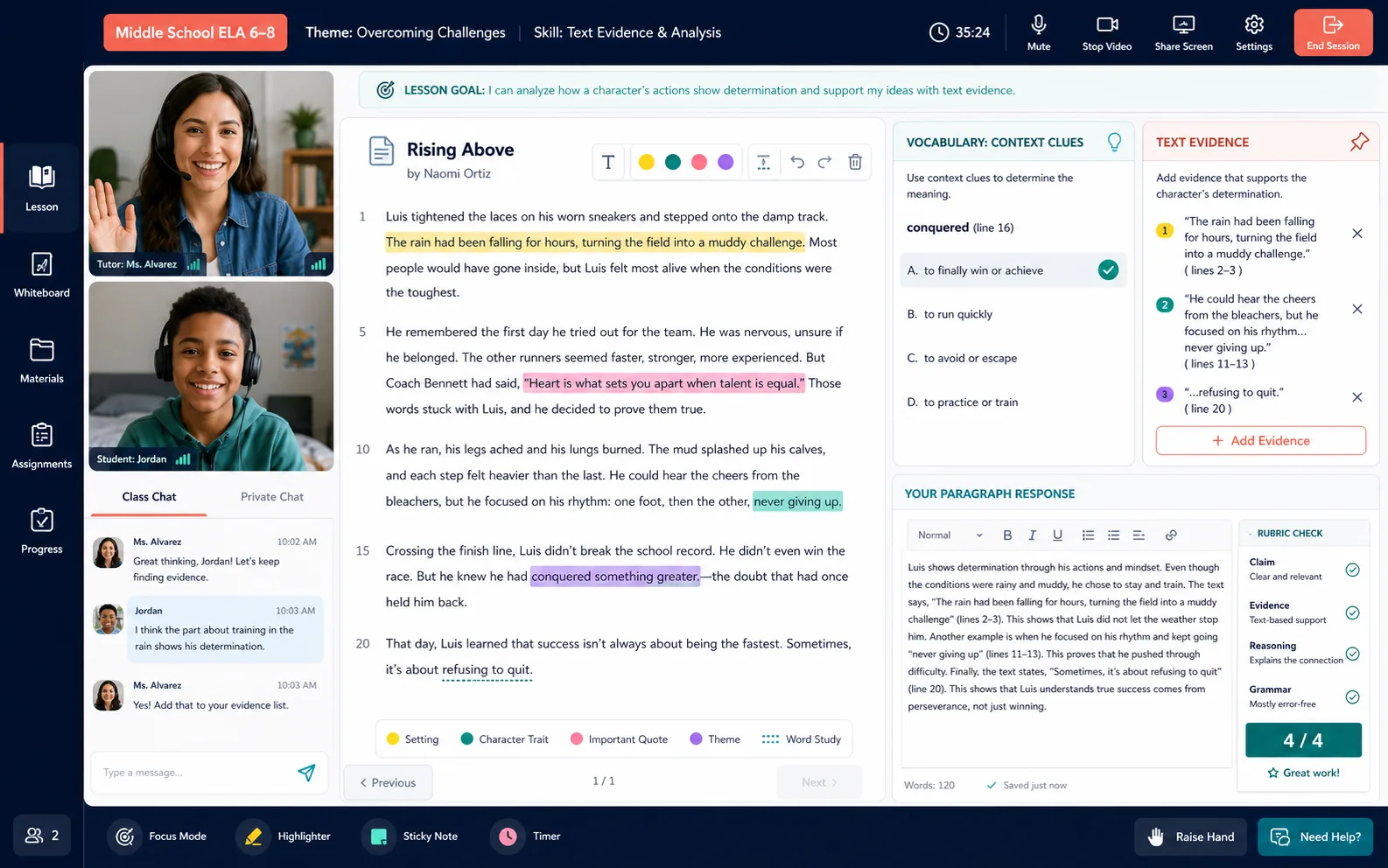
The shared class space makes ELA thinking visible: a tutor can mark a sentence, define a vocabulary word from context, collect evidence, and help the student revise the written response.
A shared passage keeps annotations, vocabulary, text evidence, and paragraph response work visible together.
The tutor can ask students to point to the exact sentence that proves an inference before writing the answer.
Grammar and revision checks happen after the meaning is clear, so students improve the response before polishing the sentence.
Middle School ELA readiness planning
Middle School ELA asks students to read closely, explain evidence, revise writing, and speak about texts. Tutoring builds a plan around the exact skill blocking the next assignment.
Common first-session materials
A passage, novel chapter, worksheet, quiz correction, rubric, teacher comment, vocabulary list, paragraph draft, or reading log helps the tutor decide the best starting point.
Students learn to read for main idea, purpose, inference, theme, point of view, tone, and evidence instead of only finishing the passage.
Tutoring turns short responses and paragraphs into a clear routine: answer the question, cite the text, explain the evidence, revise the sentence.
Students practice fixing fragments, run-ons, commas, verb tense, pronoun clarity, and sentence flow after the paragraph's meaning is strong.
Students can bring a novel, worksheet, passage, quiz, rubric, teacher comment, draft, or vocabulary list so tutoring stays tied to classwork.
Middle School ELA resources
These branded resources keep reading comprehension, vocabulary, text evidence, grammar, paragraph writing, revision, and novel study together for tutoring, independent review, or parent planning.
Main idea, inference, theme, point of view, tone, and active annotation habits.
Context clues, word parts, academic vocabulary, and meaning checks inside passages.
Claim, evidence, reasoning, quote setup, citation habits, and complete explanations.
Sentence fragments, run-ons, commas, verb tense, pronouns, and convention checks.
Topic sentences, paragraph development, transitions, conclusions, and revision layers.
Character traits, conflict, setting, discussion responses, and speaking confidence.
Five print-friendly pages covering reading comprehension, annotation, vocabulary, text evidence, short responses, grammar, writing, and novel study.
Open Review Guide PDFSeven printable pages with 50 Middle School ELA practice items across reading, vocabulary, evidence, grammar, writing, revision, and discussion, with a full answer key.
Open Practice Worksheet PDFPricing comparison
Provider pricing and packages change, so families should confirm current terms directly. This comparison shows how the Noble Educators session model differs from other familiar online learning options.
| Provider | Pricing model shown | Format | Best fit |
|---|---|---|---|
Noble EducatorsNoble rate | $15 / session | 1-on-1 online Middle School ELA tutoring | Families who want grades 6-8 reading, writing, grammar, text evidence, and school assignment support at a clear per-session rate. |
Wyzant | Tutor-set rates | Tutor marketplace | Families who prefer browsing individual tutor profiles and rates. |
Varsity Tutors | Plan-based pricing | Live tutoring and memberships | Families considering a larger tutoring package or membership model. |
Tutor.com | Subscription plans | On-demand tutoring | Students who need quick homework help across several subjects. |
Outschool | Class-specific pricing | Live and self-paced classes | Families looking for small group ELA classes as well as private learning options. |
Khan Academy | Free self-guided practice | Videos and practice activities | Independent grammar or reading review, rather than recurring live 1-on-1 tutoring. |
Common challenges
Middle School ELA asks students to combine reading, reasoning, vocabulary, grammar, writing, and discussion. Focused tutoring makes that thinking visible.
Tutors teach students to combine text clues with reasoning so inferences are supported, not random.
Students practice choosing a quote or detail, then explaining how it proves the claim in their own words.
Lessons separate meaning from mechanics, then repair fragments, run-ons, punctuation, tense, and pronouns.
Some students need passage support. Others need grammar repair, paragraph writing, novel study, vocabulary, or test review. Noble Educators can match the inquiry to a tutor who fits the student's grade, assignment, and goal.
Meet our teachersParents can share a passage photo, teacher note, assignment, rubric, quiz, or draft before tutoring begins. That gives the tutor a practical starting point and helps each session focus on the ELA skill that matters next.
See how it worksQuestions parents ask
Related tutoring
Compare related English support, tutor options, pricing, and the next steps behind a focused ELA plan.
Share the student's grade, current ELA unit, class assignment, and what feels difficult. Noble Educators will help you choose the most useful next step.